|
On May 28, the National Building Museum will present the program Afghanistan’s Architectural Legacy, exploring the role of cultural preservation and the Afghani architectural landscape. The lecture will feature Omar Sultan, deputy minister of information and culture for Afghanistan. NBM Online asked Fredrik Hiebert, National Geographic Archaeology Fellow and curator of the exhibition Afghanistan: Hidden Treasures from the National Museum, Kabul—on display May 25 through September 7, 2008 at the National Gallery of Art—about the history and future of Afghani architecture.
NBM Online: The “silk road” that connected Western Asia with China ran straight through Afghanistan. How did that influence the architecture and culture of the region?
Fredrik Hiebert: People often imagine the long distance trade across Asia (that we know as the "Silk Road") as driven simply by the markets of Rome and China—with little involvement in between. Archaeology in places such as western China, central Asia, and in particular, Afghanistan, however, shows that this is not so. Here at the heart of the trade routes, vibrant markets and towns existed both in Roman and medieval times.
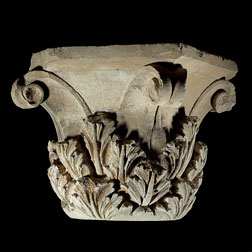
Goods and ideas passed from city to city across Afghanistan creating a wealthy society [that was] unexpected until archaeologists found the remains of these sites. Greek, Roman, Siberian (Scythian), Indian, and Chinese influences can be seen in both the local art and architecture. For instance, a Greek influence is seen in the sculpture and architecture at Ai Khanum in northern Afghanistan. At Begram, Roman, Indian, and Chinese trade goods were discovered in a 2000-year-old warehouse. These objects were likely awaiting transit to markets in the east and west, and north and south, [and provide] a veritable picture-window into the ancient trade.
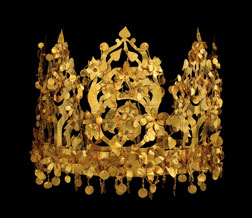
Most interesting is the gold from Tillya tepe. Though it also features all of the motifs from Greek, Roman, Chinese, Indian, and Scythian art, the golden jewelry appears to be locally made—a true piece “Silk Road" art from 2000 years ago.
NBM Online: The giant Bamiyan Buddhas were some of the best known cultural landmarks in Afghanistan. Why were they built?
Hiebert: Trade and ideas always go hand in hand; this is particularly true for the spread of religions such as Christianity, Buddhism, and Islam. By the 4th and 5th centuries C.E., trade was booming through the rich valleys of Afghanistan and at Buddhist monk-established monasteries.
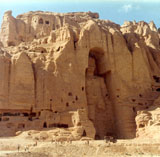
The cliffs of Bamiyan are composed of soft limestone into which the monks carved caves for dwellings and places of worship. Sometime in the 4th or 5th century C.E. they carved two giant Buddhas—these must have been beacons for traders and travelers [as they were] visible from afar. The giant Buddhas were actually covered in mud plaster which was refreshed every few decades.
In front of the carved cliff a vibrant town existed until the cities of central Asia were destroyed by Ghengis Khan in the 13th century—but life always returned to the Bamiyan Valley. To this day, the valley remains one of the most beautiful, fertile, and vibrant valleys in all of Afghanistan.
Read more of NBM Online's interview with Fredrik Hiebert and find out about the efforts currently underway to reconstruct the Bamiyan Buddhas that were destroyed by the Taliban in 2001.
|
|
SPOTLIGHT ON DESIGN
Jean Nouvel: 2008 Pritzker Architecture Prize Laureate
All right—so it isn’t the Oscars. But in the architecture world, it doesn’t get much better than the Pritzker Architecture Prize. And this year, it's coming to the National Building Museum.
Read more.
READ!
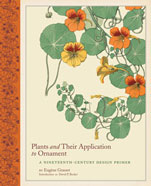
Plants and Their Application to Ornament: A Nineteenth-Century Design Primer
by Eugene Grasset
Elegant botanical illustrations from the classical 1897 design book Plants and Their Application to Ornament are reproduced in this lavish collection.
Read more.

Q: As of 2008, the Pritzker Architecture Prize has been awarded 30 times to architects from a total of 16 countries. Only five countries have produced more than one Pritzker Prize winner. What are the five countries?
Think you know the answer? Find out now. | |