An Interview with Sten Nordin, Mayor of Stockholm, Sweden; Cassio Taniguichi, Mayor of Curitiba, Brazil; and Congressman Earl Blumenauer from Oregon
On September 17, the National Building Museum will kick off the second season of its acclaimed panel series For the Greener Good with a program called “World Leaders on Sustainability.” Presented in collaboration with the National Capital Planning Commission and the Capitals Alliance, the program features leaders from Sweden, Brazil, and the United States in a panel discussion about some of the important sustainable legislation that has been passed and changes that have been made in their cities. NBM Online spoke with some of the program’s panelists about the green initiatives in their cities.
Sten Nordin, Mayor of Stockholm, Sweden
NBM Online: What role does the public play in creating a "green" capital?
Nordin: In order to make a difference everyone must take responsibility and contribute. Every third year, the city conducts an opinion poll [to assess] the inhabitants of Stockholm’s opinions regarding the city's environment. The [poll asks about] disturbance from traffic noise, the amount of accessibility to green areas, and littering. It also asks whether the environmental issues are a source of concern and which environmental issues are most urgent. It also ask questions about the environmental habits of the residents, including whether or not they sort their waste, take public transportation, whether or not they plan to buy a clean car etc.
 | The most recent poll shows that the environmental awareness has risen. More than 70 percent of Stockholmers are interested in environmental issues and believe that how they act affects the environment. Around 70 percent sort their hazardous waste and think it is important to buy eco labelled food stuffs, 80 percent believe it is important to chose environmentally-friendly means of travel, 90 percent believe it is important to save energy; and half of the inhabitants have switched to low consuming energy light bulbs.
NBM Online: How is your office promoting walk-ability in Stockholm? Has it proved successful? Yes or no? Why?
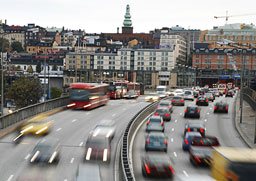
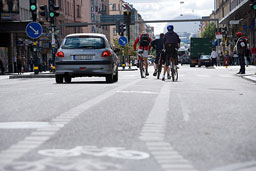
Nordin: The Stockholm Environmental Programme has a goal to increase the share of travellers who use public transportation, ride bikes, or walk. The city is continuously working to improve and maintain bike paths and walkways. Currently, 30 percent [of the city’s population] regularly bike or walk to their workplace or school; however, that figure decreases during the winter months.
Read the rest of the NBM Online interview with Sten Nordin.
Cassio Taniguichi, Mayor of Curitiba, Brazil
NBM Online: What role does the public play in creating a “green” capital?
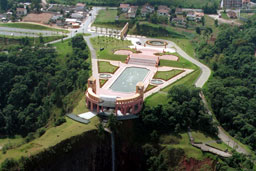
Taniguichi: All the population must participate to make a city “green.” Since the beginning of the planning process, Curitiba discussed with city inhabitants the necessity to preserve the forests, woods, and rivers; revitalize meeting points; and restore the historical buildings [out of] respect for the [city’s history].
When the “Garbage which is not garbage” program was implemented, all the population—especially children—were [encouraged] to separate the garbage at home and to dispose of it with the garbage collector.
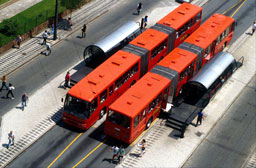
NBM Online: Curitiba has become a model for creating innovative public transportation for its citizens. How did you go about convincing the public to leave their cars behind?
Taniguichi: First of all, there is a competition between [public transportation and the car]: which mean of transportation is more efficient? Which is more environmentally friendly? Will the [taking the] car costs more than the fare?
The city must always improve its transportation network: new buses, fashionable design, better itineraries and timetables, create more capillarity to the system, a good visual communication, etc. [As well as create] affordable integrated fares just paying one fare to ride within the network or within a period of time (one hour or more).
Cassio Taniguichi, Mayor of Curitiba, Brazil
Read the rest of the interview with Cassio Taniguichi.
Congressman Earl Blumenauer, Representative for Oregon’s 3rd District
NBM Online: Portland was recently ranked the greenest city in America by Popular Science as it receives half of its power from alternative energy, 25% of the people commute to work by bike, carpool or public transportation, and it has 35 LEED certified buildings. What has enabled Portland to achieve this much success?
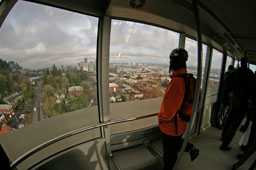 Congressman Earl Blumenauer: One of Oregon’s first environmental actions was to enact legislation to protect farmland. We were finding that sprawling development was eating up the most productive agricultural areas, and decided not to stop growth, but to plan for it. We moved forward with town halls and community meetings across the state to discuss the form that [this] growth should take and…created choices in housing, reduced reliance on driving, and [increased] energy conservation and the protection of open space. In 1973, the State Legislature and Governor Tom McCall worked together to pass Senate Bill 100, which created flexible urban growth boundaries around the major metropolitan areas, saving the rest as open space or farmland. Congressman Earl Blumenauer: One of Oregon’s first environmental actions was to enact legislation to protect farmland. We were finding that sprawling development was eating up the most productive agricultural areas, and decided not to stop growth, but to plan for it. We moved forward with town halls and community meetings across the state to discuss the form that [this] growth should take and…created choices in housing, reduced reliance on driving, and [increased] energy conservation and the protection of open space. In 1973, the State Legislature and Governor Tom McCall worked together to pass Senate Bill 100, which created flexible urban growth boundaries around the major metropolitan areas, saving the rest as open space or farmland.
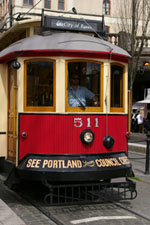 | What we discovered, however, was that there were other benefits to focusing development around existing centers: [such as the creation of] more livable communities, private investment [in] streetcars, and…a positive sense of community. Part of our success stems from an understanding that environmental protection and economic development can go hand-in-hand. Instead of forcing people into a certain way of life, we have given them choices. They can choose green power. They have transportation alternatives that mean they aren’t dependent on their cars. Furthermore, we’ve tried to help level the playing field for [the development of]…green buildings. Our efforts in this area have not only saved energy and reduced global warming, but have made Portland a better place to live…[and] one of the few major cities where the sought-after population of 20 to 34-year-olds is increasing instead of declining. Portland developers who have fueled this boom are in demand all over the West and have gained international recognition.
Read the rest of the interview with Congressman Blumenauer
Register online to attend the “World Leaders in Sustainability” For the Greener Good program.
For the Greener Good lecture series is presented by The Home Depot Foundation.
**************************************
Tomorrow’s Designers
The Inter-School Student Design Competition
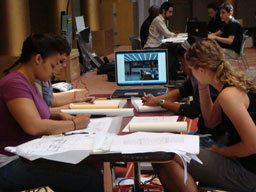
On Sunday, September 14, the Museum’s Great Hall will welcome architecture and landscape architecture students actively engaged in creative problem solving. The students are participants in the Inter-school Student Design Competition (ISDC). During this competition teams of students from the Washington, D.C. area’s four accredited schools of architecture—The Catholic University of America, Howard University, the University of Maryland, and Virginia Tech’s Washington Alexandria Architecture Center—are charged with designing a solution to a real-world design problem over the course of a day-long charrette.
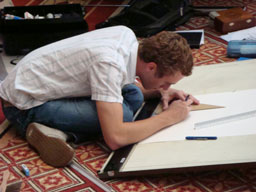 |
The ISDC is a unique program that provides hands-on learning opportunities for architecture students while giving the public unique insight into the design process. For the past 11 years, the National Building Museum has proudly served as the venue for this competition. Past competitions have included designs for a new, below-ground auditorium for the Museum and a redesign of Judiciary Square. The 2007 program focused on improving Washington, D.C.’s Martin Luther King, Jr. Memorial Library. Although a daunting task, the students rose to the occasion and produced many interesting design solutions. This year’s ISDC program will no doubt offer similar challenges.
Read the rest of the Inter-school Student Design Competition article. |
|
Awards of Excellence Presented by The Home Depot Foundation
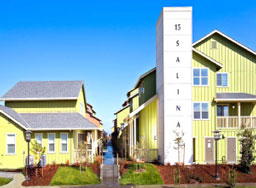
On September 17, during the For the Greener Good program “World Leaders on Sustainability,” The Home Depot Foundation will present its 4th annual Awards of Excellence for Affordable Housing Built Responsibly. Winner and runner-up awards will be presented to nonprofit affordable housing developers that not only focus on the affordability, but also consider the health and environmental impacts of housing design and construction and account for immediate and long-term operating efficiencies that keep the housing affordable over the long-term. Awards will be presented in two categories—homeownership and rental.
In addition, the Foundation will present its Visionary Award for Outstanding Leadership in Affordable Housing Built Responsibly to S. Richard Fedrizzi, president, CEO, and founding chairman of the U.S. Green Building Council. Under his leadership, the USGBC has tripled its membership, broadened its influence, and cemented its role as a leader in the global sustainability movement.
Read more about The Home Depot Foundation’s award programs.
Learn more about The Home Depot Foundation’s programs and initiatives.
SHOP: Turner Tote Bag
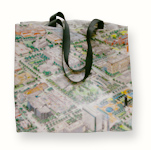
This unique, hand-made bag was created from a recycled banner that originally appeared in the Museum’s 2002 exhibition The Turner City Collection: Rendering a Century of Building.
The Museum’s Turner City Collection contains drawings commissioned by Turner Construction annually since 1910. The drawings depict the firm’s completed projects for each year and the collection is a microcosm of urban planning and design history over the past century. The Turner Tote bag was made by homeless individuals through Urban Samaritan Inc., a non-profit organization dedicated to helping the homeless return to work.
Purchase online

Q. You are about to use a time machine to go back to ancient Rome. Before you leave, your friend the Classical scholar says, “Be sure to see the velarium.” Where would you go and in what direction would you look once you got to Rome?
Think you know the answer? Find out.
| |